

A website can look polished on the surface and still be failing in ways that affect revenue, search visibility, and user trust. In practice, one of the fastest ways to understand what is really happening is to start with **Domain Analysis**: a structured review of the domain’s technical, historical, and content signals. Done well, it reveals whether a site is gaining authority, losing traffic, suffering from crawl issues, or carrying legacy problems that hurt **Website Performance** and long-term growth.
This matters more than ever. By 2024, Google’s Chrome user base had surpassed 3 billion users worldwide, and even small delays have measurable business effects. Research from Google and Deloitte has repeatedly shown that a 0.1-second improvement in mobile site speed can increase conversion rates in retail and travel. For large sites, that difference can mean millions in retained revenue.
## Why domain-level visibility beats surface-level audits
A page-speed test can tell you a lot, but it cannot explain why a site is underperforming. That is where domain-level review becomes useful. A domain is not just a URL; it is the accumulation of DNS configuration, SSL status, backlink history, subdomain architecture, indexation patterns, and content quality across the entire property.
In real projects, I’ve seen brands blame “slow hosting” when the real issue was fragmented infrastructure: separate subdomains for marketing, support, and checkout, each with inconsistent caching and cookie behavior. In another case, a site with strong design and stable uptime was losing organic traffic because an old expired domain had been redirected into the main site, carrying spammy backlinks from years earlier. These are the kinds of problems that only appear when Domain Analysis is done with context.
## What modern Domain Analysis should include
A practical review should connect technical signals with business impact. One useful approach is to inspect:
- DNS reliability and propagation speed
- SSL/TLS configuration and certificate validity
- Indexation trends in search engines
- Backlink quality and referring domain diversity
- Redirect chains and canonicalization
- Subdomain structure and cross-domain tracking
- Historical ownership or penalty risk
- Core Web Vitals and real-user performance data
Each of these affects **Website Health** differently. A broken canonical tag may not crash the site, but it can split ranking signals between duplicate pages. A misconfigured CDN can keep Time to First Byte low in one region and terrible in another. A domain with a clean technical stack but weak referring domains may remain invisible in competitive search markets.
## The performance metrics that matter in 2025
Google introduced Core Web Vitals in 2020, and they remain a useful benchmark because they connect technical behavior with user experience. The current main metrics are Largest Contentful Paint, Interaction to Next Paint, and Cumulative Layout Shift. In general, pages should aim for LCP under 2.5 seconds, INP under 200 milliseconds, and CLS below 0.1.
Those numbers are not just abstract targets. On an ecommerce site, a slow product page can increase bounce rate before the customer even sees pricing. On a SaaS landing page, a delayed hero section can reduce trial signups. Real-user monitoring platforms such as Datadog, New Relic, and SpeedCurve often show that the worst performance issues are not global—they are concentrated in certain browsers, geographies, or traffic sources.
That is why Website Performance should be measured using both synthetic tests and field data. Synthetic tests show controlled conditions. Field data reflects what users actually experience on 4G connections, older phones, or overloaded work networks.
## Domain Analysis in cybersecurity and trust
Domain review is also a security exercise. Domain hijacking, lookalike domains, and DNS misconfigurations can damage trust in a single incident. In 2023, ICANN reported hundreds of thousands of domain-related abuse complaints across the ecosystem, with phishing remaining one of the most common threats. Website Performance The problem is not limited to email scams; attackers also exploit expired domains, typo variants, and compromised subdomains.
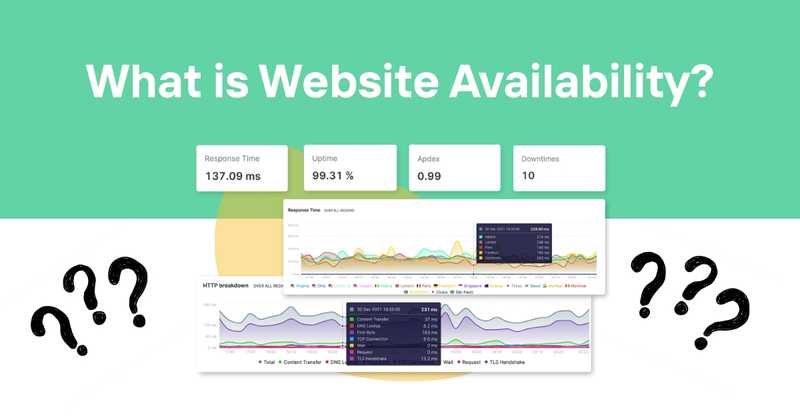
A trustworthy domain posture usually includes DNSSEC where supported, strong registrar controls, two-factor authentication, and clear renewal processes. For businesses handling payments or personal data, a weak domain setup can become a compliance issue as well. Even a short outage on the primary domain can interrupt customer access, authentication flows, and API calls.
## How teams use this in practice
Engineering, SEO, and security teams often approach the same domain from different angles, but the best results come when they share data. For example, a media company might discover that a subdomain used for legacy articles is generating millions of crawl requests with almost no traffic value. Consolidating or noindexing that section can improve crawl efficiency and reduce infrastructure load. Likewise, an ecommerce team may find that a CDN misconfiguration is slowing category pages in South America while North American users see no issue at all.
In one well-known industry pattern, performance improvements are often tied to revenue. Walmart reported that every 1-second improvement in page load time increased conversions in measurable ways, and many other retailers have seen similar gains after reducing JavaScript bloat and optimizing image delivery. The lesson is simple: technical cleanup is not a vanity project. It directly influences how many users stay, search, buy, or return.
## A practical workflow for ongoing site reviews
Use a recurring cadence instead of one-time audits. Weekly checks should look for uptime, certificate expiry, broken redirects, and major ranking fluctuations. Monthly reviews should compare crawl data, backlink growth, and Core Web Vitals trends. Quarterly checks should reassess architecture, content duplication, and domain security controls.
The most effective teams treat Website Health as a living metric, not a report buried in a folder. They connect analytics, server logs, search console data, and synthetic monitoring so problems are detected before customers complain. As websites become more distributed through APIs, edge delivery, and third-party scripts, this cross-functional view is becoming essential.
The next wave of improvement will likely come from AI-assisted monitoring and automated root-cause analysis. But the fundamentals will stay the same: understand the domain first, measure performance with real evidence, and keep trust signals intact across every layer of the stack.